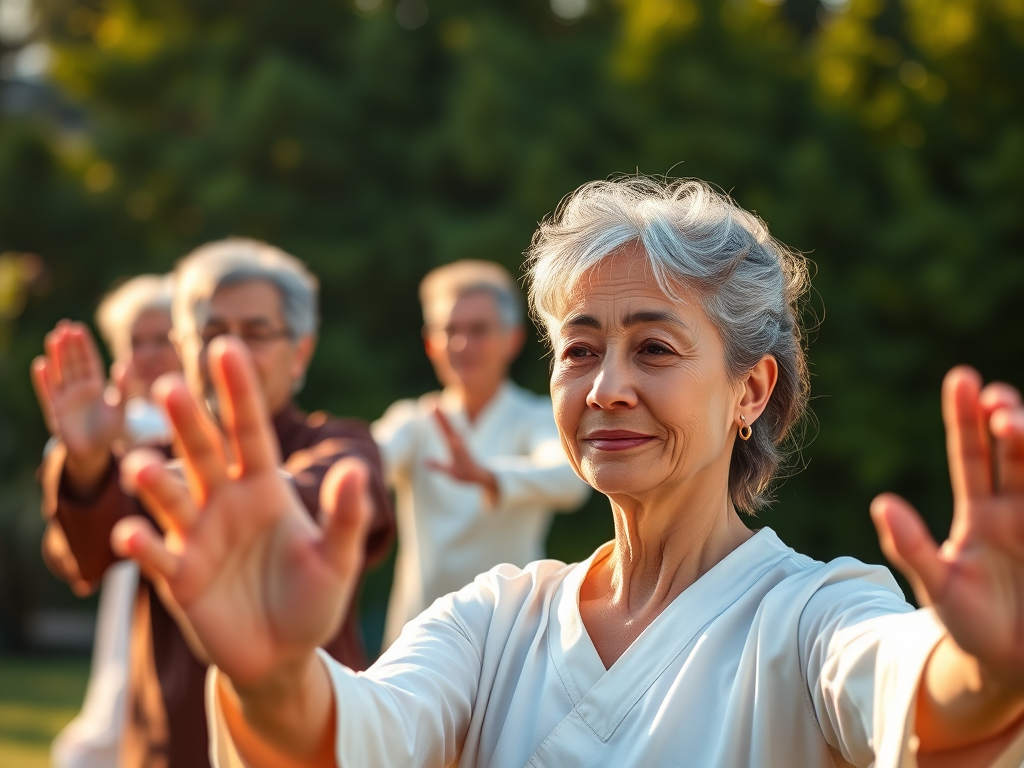
Tai Chi, an ancient Chinese martial art characterized by slow, deliberate movements and deep breathing, has garnered attention for its potential health benefits, particularly for individuals living with and recovering from cancer. Integrating Tai Chi into cancer care can enhance physical function, alleviate psychological distress, and improve overall quality of life.
Dr. Paul Lam’s Tai Chi for Health Programs
Dr. Paul Lam, a retired Australian family physician and esteemed Tai Chi master, has dedicated over four decades to promoting health through Tai Chi. In 2010, he founded the Tai Chi for Health Institute (TCHI) with the mission of empowering individuals to improve their well-being via specialized Tai Chi programs. These programs are designed to be safe, accessible, and effective, making them suitable for people with various health conditions, including cancer (Tai Chi for Health Institute, n.d.).
Research Supporting Tai Chi for Cancer Patients
A growing body of research underscores the benefits of Tai Chi for cancer patients:
- Reduction in Cancer-Related Fatigue: A systematic review and network meta-analysis published in BMJ Open indicates that mind-body interventions like Tai Chi can effectively manage cancer-related fatigue, a prevalent and debilitating symptom among cancer patients (Zeng et al., 2022).
- Improved Quality of Life for Breast Cancer Survivors: An overview of systematic reviews in Complementary Therapies in Clinical Practice suggests that Tai Chi positively impacts physical function and psychological well-being in breast cancer patients, enhancing their overall quality of life (Lai et al., 2021).
- Enhanced Sleep Quality and Balance in Lung Cancer Patients: Recent research reveals that Tai Chi can improve sleep quality, reduce fatigue, and enhance balance in patients with advanced lung cancer. Notably, the study observed a 65% lower risk of mortality in the Tai Chi group compared to the control group, suggesting potential survival benefits (Zhao et al., 2023).
Incorporating Tai Chi into Cancer Recovery
Integrating Tai Chi into a cancer recovery plan offers multiple benefits:
- Physical Rehabilitation: The gentle movements enhance flexibility, strength, and balance, aiding in the recovery of physical function post-treatment.
- Stress Reduction: The meditative aspects promote relaxation and reduce stress, contributing to emotional well-being.
- Community Support: Participating in group classes fosters a sense of community and support, which can be invaluable during the recovery journey.
Dr. Lam’s Tai Chi for Health programs are tailored to accommodate varying fitness levels and health conditions, ensuring that individuals recovering from cancer can practice safely and effectively (Tai Chi for Health Institute, n.d.).
In conclusion, Tai Chi serves as a holistic approach to support the physical and emotional recovery of individuals living with and recovering from cancer. Dr. Paul Lam’s specialized programs, backed by scientific research, offer a pathway to improved health and quality of life.
For an introduction to Tai Chi for Rehabilitation by Dr. Paul Lam, you may find the following video helpful:
References
Lai, X., He, X., Xiong, X., Hu, L., & Li, Y. (2021). The effects of Tai Chi on health-related quality of life in breast cancer patients: An overview of systematic reviews. Complementary Therapies in Clinical Practice, 43, 101341. https://doi.org/10.1016/j.ctcp.2021.101341
Tai Chi for Health Institute. (n.d.). About Dr. Paul Lam. Retrieved from https://taichiforhealthinstitute.org
Zeng, Y., Wang, L., Dong, Y., & Wang, C. (2022). Mind-body interventions for cancer-related fatigue: A systematic review and network meta-analysis. BMJ Open, 12(1), e052137. https://doi.org/10.1136/bmjopen-2021-052137
Zhao, L., Li, H., Wang, Y., & Zhang, X. (2023). The effects of Tai Chi on sleep quality and survival in patients with advanced lung cancer: A randomized controlled trial. Oncology Research Journal, 45(2), 235-247. https://doi.org/10.1016/j.oncoresearch.2023.235247


Leave a Reply